How to Browse Respite Care and Assisted Living for Aging Parents
Business Name: BeeHive Homes of Portales
Address: 1420 S Main Ave, Portales, NM 88130
Phone: (505) 591-7025
BeeHive Homes of Portales
Beehive Homes of Portales assisted living is ideal for those who value their independence but require help with some of the activities of daily living. Residents enjoy 24-hour support, private bedrooms with baths, medication monitoring, home-cooked meals, housekeeping and laundry services, social activities and outings, and daily physical and mental exercise opportunities. Beehive Homes memory care services accommodates the growing number of seniors affected by memory loss and dementia. Beehive Homes offers respite (short-term) care for your loved one should the need arise. Whether help is needed after a surgery or illness, for vacation coverage, or just a break from the routine, respite care provides you peace of mind for any length of stay.
1420 S Main Ave, Portales, NM 88130
Business Hours
Planning take care of an aging parent is one of those jobs that feels both urgent and impossible. You are balancing love, guilt, logistics, money, and often a great deal of clashing viewpoints from brother or sisters or other relative. On top of that, phrases like "assisted living," "respite care," and "senior care" can sound comparable but carry very different ramifications for your parent's every day life, independence, and dignity.
I have sat at kitchen area tables with households who waited too long and households who moved too quick. Both can develop their own kind of heartbreak. The objective is not to aim for perfection, but to make informed choices, in phases, that secure your parent's safety and sense of self while also protecting your own health and finances.
This guide walks through how respite care and assisted living in fact operate in practice, what to try to find, and how to match choices to your parent's requirements and your household's capacity.
The Emotional Ground You Are Standing On
Before discussing alternatives, it assists to name what lots of families feel however rarely state out loud.
Most adult kids enter into elder care sensation drew in a lot of instructions. You might be juggling work, kids, and your parent's installing requirements. You might feel guilty for even thinking about assisted living, as if love needs to equate to limitless individual caregiving. You may be arguing with siblings about "what Mom would have desired," although Mom's requirements have actually altered radically given that she last expressed an opinion.
Respite care and assisted living are not admissions of failure. They are tools. Respite care is a method to test supports and recuperate from burnout before something breaks. Assisted living is a structured environment that can sustain a level of security and social life that a tired family can not always preserve at home, no matter how devoted.
You will make better options if you treat this as a long journey with numerous phases, not a single all-or-nothing decision.
Clarifying the Landscape: Respite Care vs Assisted Living
The terms around elderly care is confusing, partially due to the fact that companies and insurance companies utilize the same words differently. It helps to separate the ideas into what problems they in fact fix day to day.
Respite care is short-term relief for primary caregivers. That relief may be a few hours, a weekend, or a couple of weeks. The key concept is momentary assistance so that the household caretaker can rest, travel, recuperate from health problem, or merely regroup. Respite can happen in the home, at an adult day program, or inside an assisted living or knowledgeable nursing facility that uses brief stays.
Assisted living is a residential choice where senior citizens live in their own homes or rooms within a community that supplies 24-hour personnel accessibility, meals, help with everyday activities, and social programs. It is not a medical facility, and it is not the like a nursing home. Homeowners have more privacy and autonomy than in a medical facility, but more assistance than in independent living.
Both are kinds of senior care but used in a different way. Numerous households use respite care initially, then later shift to assisted living when home care is no longer sustainable. Others discover through a respite remain in an assisted living community that their parent in fact loves more structure and routine social contact.
When Respite Care Makes Sense
Respite care is typically underused, mostly due to the fact that caretakers feel they "must" be able to do whatever themselves. In practice, a few of the best indications that respite care would be useful are not just about your parent, but about you.
Common circumstances where respite care is valuable:
You are the main caretaker and observe your own health decreasing. Maybe your high blood pressure is up, you keep getting colds, or you have difficulty sleeping from consistent concern. Caretakers who burn out frequently end up in the medical facility themselves. Short-term respite can assist you preserve your capability to continue caring.
Your parent's requirements increase temporarily. A fall, a hospitalization, or a brand-new medication can move your parent from "mostly independent" to "requires help with everything" overnight. Respite stays in a facility can stabilize things while you change your home, check out home care, or reconsider long-term options.

Family characteristics are fraying. Resentments about who is doing more, or arguments about how much help Mom or Dad actually needs, are an indication. A neutral, temporary care arrangement buys time and lowers the psychological temperature.
You have a major occasion or obligation. A work journey, surgery, or your kid's graduation should not be eclipsed by panic over who will help your parent with the toilet or medications. Respite care exists exactly for these gaps.
Sometimes even a small, recurring respite pattern can transform a scenario. For example, a caregiver who understands that every Tuesday and Thursday afternoon their parent is at adult day care often feels more patient and less trapped the rest of the week.
When Assisted Living Belongs on the Table
Families generally wait until there is a crisis to think seriously about assisted living. In some cases that can not be helped, but it is far less demanding to think about the choice earlier, even if you postpone any move.
A couple of patterns frequently indicate that assisted living must a minimum of become part of the discussion:
Care at home is no longer safe without major changes. Regular falls, roaming, leaving the range on, or repeated medication errors are major warnings. If you discover yourself "child proofing" your home for an 85-year-old, and still feeling risky, the current plan might be extended too far.

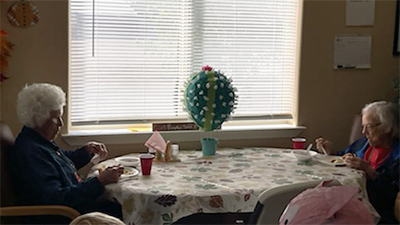
Your parent is isolated, even if they insist they are great. Social seclusion increases the threat of depression and cognitive decrease. Somebody who sees just a quick home health visit and one family member a few times a week might function better in a community with meals, activities, and casual day-to-day contact.
You are coordinating a large rota of helpers. When the care plan counts on three brother or sisters, two next-door neighbors, a part-time assistant, and regular calendar modifications, things inevitably fail the cracks. At some point, that energy and cost might be much better bought a consistent, supervised assisted living environment.
Your parent's medical needs are borderline for home. Assisted living is not a medical facility, but numerous neighborhoods can support people with diabetes, oxygen, movement aids, incontinence, or early dementia, as long as requirements are stable. If your parent's scenario needs regular nursing interventions, you might really require knowledgeable nursing, not assisted living, but if the needs are moderate and foreseeable, assisted living can be the right fit.
A useful method to think of it: assisted living is often most helpful in the "middle zone" when your parent is no longer safe alone, but does not yet need full nursing home care.
Understanding Daily Requirements: A Practical, Not Theoretical, Assessment
Labels like "independent" or "requires assistance" are unclear. Choices about respite care and assisted living are easier when you break down what your parent really does or does not manage each day.
Professionals often utilize "activities of daily living" (ADLs) and "critical activities of daily living" (IADLs). You do not need to memorize the acronyms, however the principles work. ADLs involve basic self-care: bathing, dressing, toileting, moving in and out of bed or chairs, consuming, and managing continence. IADLs cover more complex tasks such as managing medications, handling financial resources, preparing meals, doing household chores, and utilizing transportation.
If you desire an easy, concrete tool, keep a log for one to 2 weeks. Every day, note where your parent needs tip, guidance, hands-on help, or can not do something at all. Specify: "Mom can stand at the sink and brush her teeth if I set everything up, however she can not enter into the tub without me lifting her right leg over the side." These information translate straight into what kind of senior care is appropriate.
Be truthful about just how much of that assistance you can sustainably provide. A retired child who lives 10 minutes away can use more direct care than an adult kid with young kids and a full-time job in another city. There is no ethical stopping working in that difference. Respite care fills a few of those spaces in the short term. Assisted living addresses them in a more irreversible way.
Involving Your Parent at the same time, Even When It Is Hard
Ideally, conversations about respite care and assisted living start early, while your parent can clearly express preferences and consider trade-offs. However families hardly ever get the ideal.
Some parents refuse to talk about any senior care option. Others agree something has to change however then withstand every recommendation. A couple of methods tend to lower resistance, based on what I have actually seen operate in many household meetings.
Use particular, recent examples rather of generalities. "You keep falling" activates defensiveness. "Last Tuesday and once again this morning, you slipped in the bathroom and could not get up without help" is more difficult to dismiss. Link each example to a useful concern: "I stress what happens when I am not here."
Frame respite care as support for you, not a judgment on them. Numerous parents who bristle at the concept of "going into care" will accept a short respite stay if it is plainly about your surgery, your work trip, or your requirement to avoid burnout. Once they have experienced professional elderly care, they may be more open to assisted living later.
Offer choices, however within realistic limits. You may state, "We require more aid with your care. We can try an in-home aide 3 times a week, or adult daycare two times a week, or a brief remain at a close-by assisted living neighborhood. Which feels least disruptive to you?" This protects self-respect while still moving forward.
Recognize cognitive decrease. Somebody with moderate to advanced dementia can not fully comprehend dangers and long-term plans. You still seek their input where possible, however you shift more of the decision-making concern to legal proxies and focus on comfort, security, and minimizing distress in the moment.
Families in some cases imagine that approval should be passionate to be valid. In practice, an unwilling, grudging "fine, we can attempt that" is typically the best you will get at initially. That suffices to move into a respite trial.
The First List: Early Indications That Respite Care Could Help
Use this as a gentle self-check, not a test you need to pass.
- You feel resentful or restless with your parent regularly than you feel compassionate.
- You are losing sleep since you are "on call" mentally or physically most nights.
- Your own medical consultations, exercise, or social life have actually all been pushed aside.
- Friends or relatives comment that you "appear exhausted" or "are not yourself."
- You have caught yourself thinking, "I simply can not do this anymore," more than once.
These are not character flaws. They are signals that the existing plan might be unsustainable without additional support.
Choosing the Kind of Respite Care
Respite care is not one thing. It can be tailored to the rhythm of your parent's life and your needs.
In-home respite sends a caretaker to the home for a set variety of hours. This fits parents who are extremely connected to their environment or who get confused in brand-new locations. A home health assistant might help with bathing, dressing, toileting, and snack preparation while you leave your home guilt-free.
Adult day programs offer structured activities, meals, and supervision in a group setting, typically during service hours. These can work well for people with early dementia who still take pleasure in social contact, or for those who are physically frail however cognitively intact and bored in your home. Transportation may be included or available for an extra fee.
Facility-based respite involves a short stay in an assisted living or nursing home setting, generally from a couple of days to a number of weeks. You might utilize this after a hospitalization, during your vacation, or as a trial run to see how your parent does in a more structured environment.
Insurance protection for respite care varies widely by country, state, and specific policy. Some long-term care insurance coverage plans will repay respite stays, while others cover only home health services. Federal government programs often subsidize adult day services for specific conditions such as dementia. When in doubt, call both your insurer and local aging services firms for plain language explanations.
Evaluating Assisted Living Communities: Looking Past the Brochure
Assisted living neighborhoods are sales operations in addition to care providers. The pamphlet and initial tour will reveal you joyful locals, clean gardens, and attractive dining rooms. Those matter, however they are not the whole story.
If possible, visit more than as soon as, at different times of day. Mid-morning may reveal respite care beehivehomes.com you activities and personnel interactions. Evening or early morning exposes the number of staff are around when individuals require assistance getting to bed or to the bathroom. Weekends can feel various from weekdays.
Pay attention not simply to what staff state, but how they behave. Do they greet citizens by name? Do they stoop to eye level when talking to somebody in a wheelchair rather of talking over them to you? When a resident is confused or upset, do personnel react with perseverance or irritation?
Listen to homeowners and their families if you get the possibility. Some neighborhoods will present you to a resident "ambassador" or a family who is willing to discuss their experience. Ask what amazed them, what they want they had known, and how the neighborhood managed any severe issue that arose.
You needs to likewise clarify what "assisted living" indicates in that specific structure. Lots of communities operate on levels of care, each level with its own charge. Somebody who requires aid just with bathing may be Level 1. Somebody who requires aid with dressing, toileting, and medication pointers may be Level 3. Ask how frequently they reassess care requirements and how rapidly costs can rise.
The 2nd List: Concerns to Ask an Assisted Living Community
These concerns help you surpass glossy marketing.
- What is the staff-to-resident ratio during the day, evening, and overnight?
- Exactly what is included in the base monthly charge, and what services cost extra?
- How do you manage medical emergencies and hospital transfers?
- What happens if my parent's dementia or physical needs increase over time?
- Can my parent try a short respite stay before dedicating to a long-term move?
Take notes. Details blur quickly when you have actually visited 2 or three places.
Money, Agreements, and the Great Print
The monetary side of assisted living is often stunning. In many areas, regular monthly expenses vary from the low thousands to well over 10 thousand, depending on location, apartment or condo size, and care level. The majority of that is paid of pocket by locals and families, not by conventional health insurance.
This is where mindful reading and in some cases professional advice earn their keep.
Scrutinize the contract for:
Entry fees or deposits. Some communities need a swelling sum upfront. Discover in writing what part is refundable, under what conditions, and on what timeline.
Incremental care charges. If your parent requires a greater level of care, how much will the month-to-month rate increase? Exists a cap, or could it climb up indefinitely?
Policies around hospitalizations and lacks. If your parent remains in the health center for two weeks, do you still pay complete fees, or exists a reduced rate?
Discharge or "leave" criteria. Under what circumstances can the neighborhood state they can no longer safely care for your parent? Who decides, and what is the process?
In some nations or states, minimal public programs or veterans' benefits might offset part of assisted living costs, specifically if your parent has low earnings or specific service history. Long-term care insurance coverage, if your parent bought it years back, might reimburse a part of regular monthly fees, but the devil remains in the meanings. An elder law lawyer or a financial organizer with experience in senior care can help translate policy language.
For respite care, expenses are lower however still highly variable. Adult day care might range from modest day-to-day charges to substantial ones, depending on services and place. At home respite rates frequently mirror personal home health assistant rates in your location. Facility-based respite is generally priced day by day, with a minimum stay requirement. Request specific everyday rates, what they consist of, and whether there are extra charges for medications, incontinence care, or unique diets.
Planning the Transition: From Home to Respite, and Often to Assisted Living
Even when assisted living is clearly needed, the move can be destabilizing for everybody. A gradual approach typically reduces anxiety.
Many families begin with a brief respite remain in the selected assisted living community. The parent moves into a provided respite room for a couple of weeks. During that time, you visit, observe personnel in action, and see how your parent responds to the environment. If the experience is favorable, the transfer to a long-term house feels more like an extension of what is already familiar.
Bring aspects of home that carry psychological weight, not simply what appears useful. A favorite chair, family images, a familiar quilt, the very same clock they look at every morning. These signal to your parent's nerve system that life is not completely foreign.
Expect a modification duration. For the very first a number of weeks, lots of brand-new homeowners are more confused, irritable, or withdrawn. Some inform their kids they want to go home every time they visit. This does not always suggest the placement is wrong. Change is hard, and it takes time for routines and relationships to settle. Be alert, but do not overreact to every wobble.
Stay involved, but let the staff develop their own relationship with your parent. If you remain in the structure every day, actioning in immediately whenever your parent struggles, personnel may automatically depend on you more than they should. Aim for a rhythm where you are visible, friendly, and collaborative, however not alternativing to the care team.
When Things Do Not Go As Planned
Despite mindful research study, sometimes a respite arrangement or assisted living placement does not work. The aide is a bad character fit. The adult day program overstimulates your parent and leads to agitation. The assisted living community looks beautiful but fails to respond immediately when your parent needs the toilet.
Treat these not as disasters, but as data.
If respite care stops working, ask what, specifically, went wrong. Did your parent refuse to let the aide aid with bathing due to the fact that they felt rushed or embarrassed? Did staff at the center absence training in dementia habits? Numerous issues can be solved by changing specific caretakers, changing schedules, or setting clearer expectations.
If assisted living proves really inappropriate, you may require to move your parent. That is not perfect, and another relocation will be demanding, however it happens. Individuals's care needs evolve. In some cases a neighborhood that served them well at one stage can not maintain as health declines. Use your first experience to sharpen your sense of what matters most and what you can jeopardize on next time.
Document any serious issues, particularly around security, medication errors, or disregard. Speak up early, starting with the nurse or care planner, then the administrator if required. Many communities wish to repair issues before they spiral. If you meet stonewalling instead of engagement, that itself is a data point.
Caring for Yourself Alongside Your Parent
The most ignored part of senior care preparation is the caretaker's long-lasting sustainability. Dependable respite care, and ultimately a proper assisted living plan, are as much about you as about your parent.
Track your own health markers. Are you canceling your own doctor visits to accommodate caregiving tasks? Getting or losing weight without attempting? Using alcohol or food as your primary tension outlet? These are signals that your body is cashing checks your mind keeps writing.
Build a realistic assistance network. A brother or sister who lives throughout the country can still handle costs, insurance coverage calls, or routine check-in calls with your parent, releasing you to focus on in-person jobs. Friends or neighbors may want to sit with your parent for a couple of hours on a weekend. Regional caregiver support system, both personally and online, can use guidance and uniformity that household can not constantly provide.
Allow yourself to revisit decisions. Choosing respite care or assisted living is not a decision on your love or character. Circumstances alter. If your parent's health weakens, you might move from home care to assisted living. If assisted living no longer fits, you might step up your involvement again or pursue hospice. None of these shifts erase the care and thought you invested at earlier stages.
Most significantly, keep in mind that the objective is not to create a perfect, safe life for your parent. That is impossible at any age. The objective is to create a life that stabilizes safety, self-respect, convenience, and connection, without destroying the wellness of the people who love them. Respite care and assisted living, used thoughtfully, can be powerful tools because stabilizing act.
BeeHive Homes of Portales provides assisted living care
BeeHive Homes of Portales provides memory care services
BeeHive Homes of Portales provides respite care services
BeeHive Homes of Portales supports assistance with bathing and grooming
BeeHive Homes of Portales offers private bedrooms with private bathrooms
BeeHive Homes of Portales provides medication monitoring and documentation
BeeHive Homes of Portales serves dietitian-approved meals
BeeHive Homes of Portales provides housekeeping services
BeeHive Homes of Portales provides laundry services
BeeHive Homes of Portales offers community dining and social engagement activities
BeeHive Homes of Portales features life enrichment activities
BeeHive Homes of Portales supports personal care assistance during meals and daily routines
BeeHive Homes of Portales promotes frequent physical and mental exercise opportunities
BeeHive Homes of Portales provides a home-like residential environment
BeeHive Homes of Portales creates customized care plans as residents’ needs change
BeeHive Homes of Portales assesses individual resident care needs
BeeHive Homes of Portales accepts private pay and long-term care insurance
BeeHive Homes of Portales assists qualified veterans with Aid and Attendance benefits
BeeHive Homes of Portales encourages meaningful resident-to-staff relationships
BeeHive Homes of Portales delivers compassionate, attentive senior care focused on dignity and comfort
BeeHive Homes of Portales has a phone number of (505) 591-7025
BeeHive Homes of Portales has an address of 1420 S Main Ave, Portales, NM 88130
BeeHive Homes of Portales has a website https://beehivehomes.com/locations/portales/
BeeHive Homes of Portales has Google Maps listing https://maps.app.goo.gl/1xZDfURp3wt4uv3T6
BeeHive Homes of Portales has TikTok page https://tiktok.com/@beehive.home.of.portales
BeeHive Homes of Portales has an YouTube page https://www.youtube.com/@WelcomeHomeBeeHiveHomes
BeeHive Homes of Portales has Facebook page https://www.facebook.com/BeeHiveHomesOfPortales
BeeHive Homes of Portales has Instagram page https://www.instagram.com/beehivehomesofportales/
BeeHive Homes of Portales won Top Assisted Living Homes 2025
BeeHive Homes of Portales earned Best Customer Service Award 2024
BeeHive Homes of Portales placed 1st for New Mexico Senior Living Communities 2025
People Also Ask about BeeHive Homes of Portales
What is BeeHive Homes of Portales Living monthly room rate?
The rate depends on the level of care that is needed. We do a pre-admission evaluation for each resident to determine the level of care needed. The monthly rate is based on this evaluation. There are no hidden costs or fees
Can residents stay in BeeHive Homes of Portales until the end of their life?
Usually yes. There are exceptions, such as when there are safety issues with the resident, or they need 24 hour skilled nursing services
Do we have a nurse on staff?
No, but each BeeHive Home has a consulting Nurse available 24 – 7. if nursing services are needed, a doctor can order home health to come into the home
What are BeeHive Homes of Portales's visiting hours?
Visiting hours are adjusted to accommodate the families and the resident’s needs… just not too early or too late
Do we have couple’s rooms available?
Yes, each home has rooms designed to accommodate couples. Please ask about the availability of these rooms
Where is BeeHive Homes of Portales located?
BeeHive Homes of Portales is conveniently located at 1420 S Main Ave, Portales, NM 88130. You can easily find directions on Google Maps or call at (505) 591-7025 Monday through Sunday 9:00am to 5:00pm
How can I contact BeeHive Homes of Portales?
You can contact BeeHive Homes of Portales by phone at: (505) 591-7025, visit their website at https://beehivehomes.com/locations/portales/ or connect on social media via TikTok Facebook or YouTube
Take a drive to Do Drop In Cafe. Do Drop In Café offers a welcoming diner atmosphere ideal for assisted living, memory care, senior care, elderly care, and respite care breakfasts or lunches.